


AnimalProtech Blog
Why cats have vertical pupils: what studies suggest
A cat’s pupil is more than a striking slit. Its shape is linked to changing light, the eye’s optics and the hunting style of a small ambush predator.
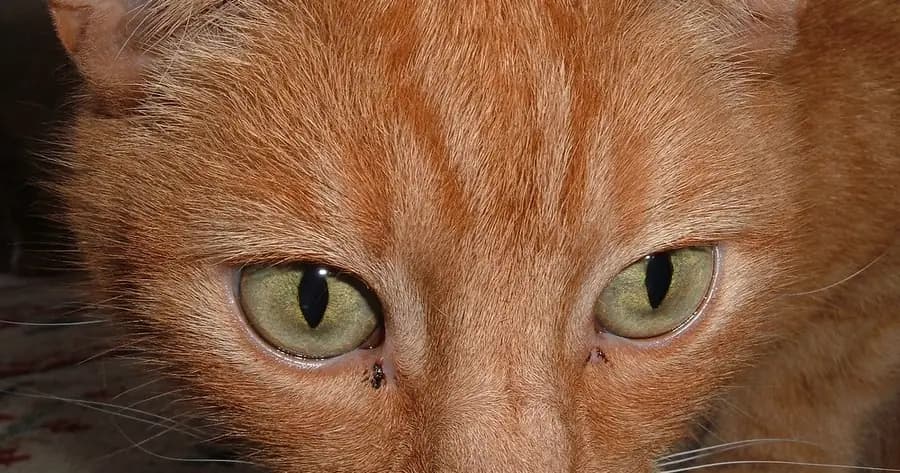
In bright light, a domestic cat’s pupil can contract to a narrow vertical line. In dim conditions, it expands until the opening appears almost round. This change controls how much light reaches the retina, but that function alone does not explain why the slit is vertical rather than circular, as it is in people, dogs and many large cats.
Research indicates that pupil shape is associated with an animal’s optics and ecological niche. It does not follow a simple rule such as “predators have slit pupils”. A 2015 study in Science Advances compared pupil shapes with activity and feeding patterns across terrestrial species. Vertical pupils were strongly associated with ambush predators active during both day and night, especially those with eyes relatively close to the ground.
How vertical pupils may help an ambush hunter
A small cat stalks close to the ground before striking over a short distance. The researchers proposed that a vertical pupil supports two depth cues suited to this strategy. Differences between the images seen by each eye help with horizontal contours, while optical blur may help estimate the distance of vertical contours. These cues may be particularly valuable near ground level.
This is an evolutionary explanation based on associations and optical modelling. It does not mean that cats consciously use the pupil to measure the distance to prey, nor does it establish a single cause for every species’ eye shape.
How a slit pupil works with the lens
An earlier study in the Journal of Experimental Biology examined pupil shape and lens optics in terrestrial vertebrates. Among the animals sampled, slit pupils occurred only in animals with multifocal optical systems. A multifocal lens contains zones with different focal properties. In bright light, a narrow circular pupil could block the outer zones; a slit can remain narrow while still exposing several zones across the lens.
Domestic cats in that study combined slit pupils with multifocal optics. Large felids did not all share this arrangement: the Siberian tiger had circular pupils and a monofocal system, while the Eurasian lynx showed an intermediate design. Body size, eye height, activity, hunting strategy and optics all appear to matter.
What pupil shape cannot tell you
- A narrow slit usually reflects brighter light; it is not a dependable sign of anger.
- Wide pupils can accompany darkness, arousal or fear, so the surrounding context matters.
- A photograph cannot show everything an animal can see.
- Different pupil shapes are adaptations, not a ranking of better and worse eyes.
The evidence points to a combination rather than one neat explanation. The iris regulates light, the slit interacts with the lens, and its vertical orientation appears well suited to a small predator that hunts from close to the ground.
Frequently asked questions
- Do all cats have vertical pupils?
- No. Domestic cats and several small felids have vertical slits, while many large felids have round pupils. Research links these differences to optics, body size and hunting ecology.
- Does a narrow pupil mean that a cat is angry?
- Not by itself. Bright light naturally constricts the pupil. Interpret it in context, including the cat’s posture, ears, tail, movement and the available light.
References
- Science Advances — why animal eyes have pupils of different shapes - Research paper
- Journal of Experimental Biology — pupil shape and lens optics - Research paper