


AnimalProtech Blog
How sea turtles use Earth’s magnetic field to navigate
Experiments suggest that sea turtles inherit some magnetic responses and can learn others. The science is striking, but it is more nuanced than a built-in GPS.
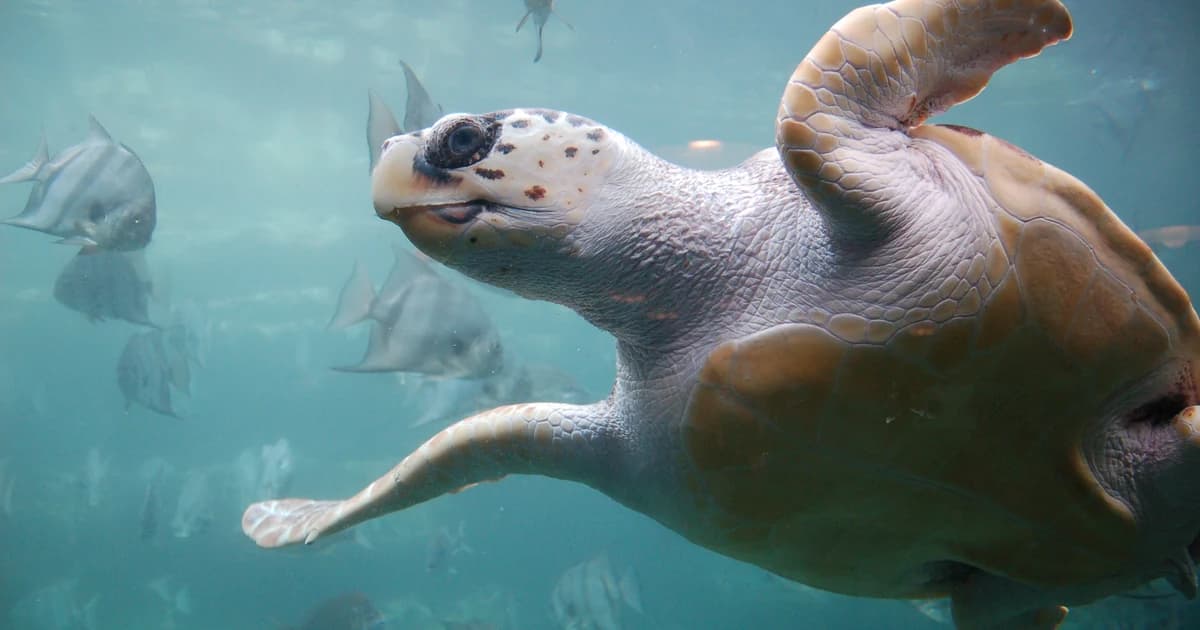
How sea turtles navigate across vast stretches of open water is not fully understood. Many travel between feeding areas and nesting regions with few useful visual landmarks. Experiments point to one source of information: the Earth’s magnetic field. Magnetism helps explain part of the journey, but calling it a built-in GPS skips over what researchers have actually shown.
The magnetic field changes from place to place
The field is not identical across the planet. Its intensity varies, as does its inclination—the angle at which field lines intersect the Earth’s surface. Together, those features can provide a regional magnetic signature.
Researchers use two everyday metaphors to describe different jobs. A magnetic “map” offers information related to position, while a magnetic “compass” supplies direction. Neither term means that a turtle sees coordinates, follows a stored route turn by turn or identifies one exact beach from magnetism alone.
Some responses appear before a turtle’s first migration
Laboratory experiments exposed loggerhead hatchlings to fields matching regions along their North Atlantic migratory route. The turtles changed their swimming direction in ways that would help keep them within suitable waters. Because they had never migrated, scientists describe these regional responses as inherited.
Appearing before migration does not prove that the response is entirely genetic. The magnetic environment during development or early life may also shape it, and real routes are influenced by ocean currents as well as active swimming.
Loggerheads can learn useful magnetic signatures
A 2025 study found that juvenile loggerhead turtles could also learn to associate simulated magnetic fields with food. When later placed in a field linked with feeding, they showed an anticipatory response even without food being offered. The experiment demonstrated learned recognition of a magnetic signature under controlled conditions.
The evidence supports a narrower conclusion: loggerheads show inherited regional responses and can learn magnetic signatures. Whether they use learned signatures to navigate back to feeding grounds in the wild was not directly tested.
Map and compass signals may be detected differently
In the same 2025 research, a radiofrequency treatment left the learned-map response intact but disrupted orientation in a separate assay with newly hatched loggerheads that required both map and compass. Because the map response was unaffected, the authors interpreted the contrast as evidence that compass and map rely on different physical mechanisms.
No exact receptor, anatomical site or complete physical mechanism has been identified for either sense. The radiofrequency field was part of a controlled experiment, so the result is not evidence that phones, Wi-Fi or ordinary household electronics harm sea turtles or disable their navigation.
Magnetism is one cue in a larger navigation system
In a small 2011 field experiment, adult green turtles carrying magnets were not significantly impaired far from their nesting island but were less efficient within 50 kilometers of the island. The result suggests that the importance of magnetic information can change with distance; possible visual or olfactory cues near a goal remain unresolved. The mix need not be identical across species or journeys.
NOAA identifies bycatch in fishing gear as the greatest continuing threat to loggerheads worldwide. Artificial beachfront light is a separate visual hazard that can disorient nesting females and hatchlings. Following local turtle-safe-lighting guidance, keeping a respectful distance and supporting evidence-based bycatch reduction address known risks without speculating about magnetic receptors.
Frequently asked questions
- Do sea turtles have a built-in GPS?
- No. GPS is a convenient but misleading shorthand. Sea turtles can respond to regional magnetic information and directional cues, but research does not show that they read exact coordinates or follow a complete turn-by-turn route.
- Do ordinary electronics interfere with sea-turtle navigation?
- The cited research does not establish that. It used a controlled radiofrequency treatment to test a possible sensory mechanism; that result should not be extended to phones, Wi-Fi or household devices without evidence.
- Is the magnetic field the only guide sea turtles use?
- No. Field and laboratory studies indicate that magnetic information is one part of navigation. Currents, waves, vision and experience may also contribute, while the role of possible olfactory cues near a goal remains unresolved.
References
- Nature — Learned magnetic map cues and two mechanisms of magnetoreception in turtles - Peer-reviewed experimental study
- Journal of Comparative Physiology A — Magnetic maps in animal navigation - Peer-reviewed scientific review
- PLOS ONE — The Role of Geomagnetic Cues in Green Turtle Open Sea Navigation - Peer-reviewed field study
- NOAA Fisheries — Loggerhead turtle science - Government species and conservation guidance