


AnimalProtech Blog
How to brush your dog's or cat's teeth safely
A useful dental routine begins with comfort, not restraint. Learn how to introduce brushing slowly, choose safe products and recognise mouth pain.
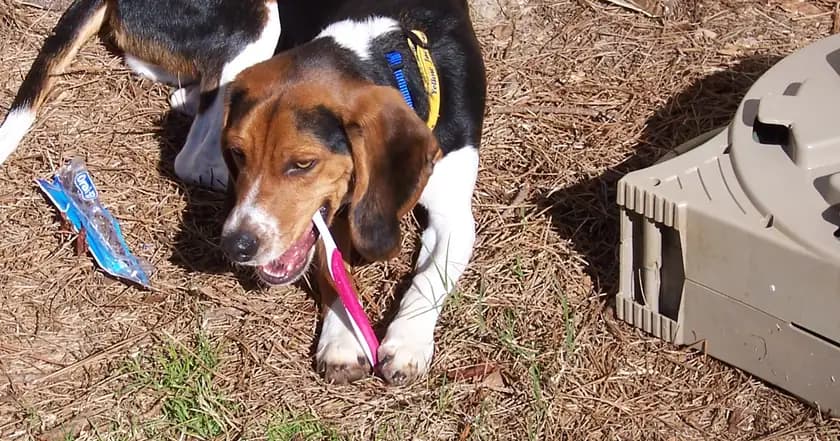
Brushing a pet's teeth is preventive care, not a test of obedience. Plaque begins forming again soon after it is removed, and regular brushing is the most effective way to control it at home. The routine only helps, however, when the mouth is comfortable and the animal can learn what to expect.
Aim for daily brushing, as veterinary guidance recommends, and build up gradually if that is not yet realistic. Ten calm seconds today are more useful than holding an animal down to finish every tooth.
Check for pain before introducing a brush
Arrange a veterinary dental assessment before starting if the animal has bad breath, red or bleeding gums, facial swelling, heavy drooling, loose or broken teeth, difficulty eating, or a sudden change in behaviour. Brushing inflamed tissue can hurt, and an animal in pain may bite even if normally gentle.
Do not try to scrape off hard tartar yourself. Home brushing reduces soft plaque; it cannot reveal disease below the gumline or treat an infected, fractured or resorbing tooth. A veterinarian can decide whether the mouth needs treatment before home care begins.
Build the routine one small step at a time
The World Small Animal Veterinary Association recommends introducing toothbrushing gradually. Begin by touching the cheeks and briefly lifting a lip, then reward the animal and stop. Once that feels ordinary, use a clean finger to touch the outer surface of one tooth before introducing a soft brush over later sessions.
Let the animal inspect the brush and pet toothpaste first. Work for seconds rather than minutes at the beginning, pause when they pull away, and return another day. There is no deadline. The outer tooth surfaces are the practical priority when opening the mouth causes stress; forcing access can undo the trust already built.
Choose products made for the species
Use toothpaste formulated for pets and a soft brush suited to the animal's mouth. Never substitute human toothpaste, which is not designed to be swallowed. Some human dental products contain xylitol, a sweetener that can cause a rapid, life-threatening drop in a dog's blood sugar. If a dog may have swallowed xylitol, contact a veterinarian, emergency clinic or animal poison service immediately rather than waiting for symptoms.
Dental diets, chews, wipes, gels and water additives may supplement brushing. The Veterinary Oral Health Council lists products that have met its standard for a specific plaque or tartar claim. Check the exact product and claim, because formulas and availability differ between countries, and ask a veterinarian whether it suits the individual animal.
Know when home care has reached its limit
Dogs and cats still need regular oral examinations; the schedule depends on age, anatomy and dental history. A complete professional cleaning requires anaesthesia so the veterinary team can examine, X-ray and clean below the gumline without pain or sudden movement. An anaesthesia-free scaling may make visible teeth look cleaner while leaving disease untouched.
Seek prompt veterinary advice for mouth pain or appetite changes. Heavy bleeding, major facial trauma, breathing difficulty or rapidly worsening swelling warrants emergency care. This article offers general prevention guidance and cannot diagnose or treat dental disease.
Frequently asked questions
- Can dental chews replace toothbrushing?
- No. An evidence-backed chew or dental diet may support plaque or tartar control, but brushing remains the most effective home method. Neither replaces veterinary examinations or treatment.
- Can I use human toothpaste for my dog or cat?
- No. Use a toothpaste made for pets. Human products are not designed to be swallowed, and some contain xylitol, which can cause a life-threatening poisoning in dogs.
References
- American Animal Hospital Association — dog and cat dental disease and home care - Veterinary guidance
- World Small Animal Veterinary Association — toothbrushing toolkit - Veterinary guidance
- US Food and Drug Administration — xylitol poisoning in dogs - Veterinary safety guidance
- Veterinary Oral Health Council — accepted dental products - Product evidence register